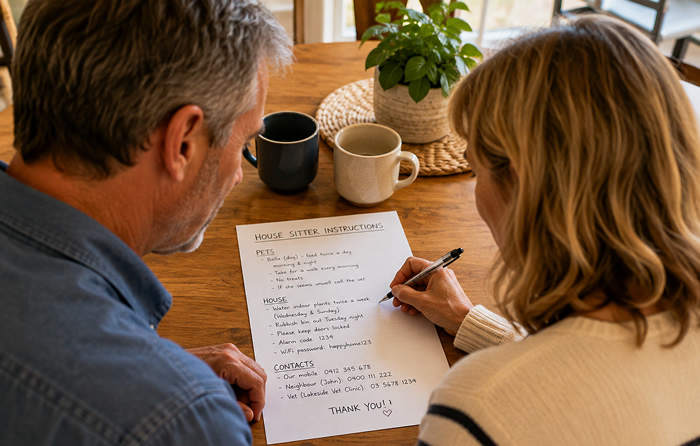
A successful house sit usually begins long before the house sitter arrives with their suitcase. The more clearly a home owner explains what is expected – and the more questions a sitter asks – the more likely everyone is to enjoy a trouble-free experience
Every home, pet and house-sitting arrangement is different. What seems obvious to a home owner who has lived in the property for years may not be obvious to a sitter who has never been there before. A few minutes spent discussing the details can prevent misunderstandings later.
What should home owners tell their house sitter?
The first step is to make sure the house-sitting advertisement accurately describes the position. Be honest and specific about the number and type of pets, their care requirements, gardening or other household duties, and anything else the sitter will be expected to do. It’s important that responsibilities are discussed and agreed before the position is accepted.
Once a sitter has been chosen, provide written instructions covering the things they will need to know during their stay.
Pet care
Don’t assume that a sitter will know your pet’s routine. Explain:
- What, when and how much each pet is fed.
- Treats and foods that are permitted or prohibited.
- Walking and exercise routines.
- Medication and how it is administered.
- Sleeping arrangements and whether pets are allowed on beds or furniture.
- Favourite toys, games and routines.
- Any behavioural quirks, fears or things that may cause anxiety.
- What to do if a pet becomes unwell or escapes.
Leave your vet’s details and the contact details of someone local who can help if you cannot be reached.
Looking after the home
Explain how to use anything the sitter is expected to operate. This might include heating and cooling, the television, washing machine, dishwasher, oven, pool equipment, irrigation system, security alarm and rubbish collection.
Don’t forget the little things. Explain where cleaning products are kept, which rooms are available to the sitter, how to operate unusual locks or doors, and whether there are any areas that are off-limits.
If Wi-Fi is available, provide the password. If the sitter is permitted to use a vehicle, make sure the arrangements and any conditions are clearly understood beforehand.
Visitors and access
Be clear about whether your friends or family members will call in, and if the sitters can have guests, whether tradespeople are expected, and whether anyone else has keys. If there are security cameras, explain where they are and how they operate. When registering with Mindahome, home owners agree to turn off internal security cameras while the sitters are in their home.
Finally, discuss how often you would like to hear from your sitter. Some owners appreciate daily updates and photos; others only want to be contacted if there is a problem.
What should house sitters ask?
Don’t be afraid to ask questions. Asking for clarification demonstrates that you take the responsibility seriously.
Before accepting a sit, make sure you understand exactly what will be expected of you. Ask about pet routines, household duties, garden and pool maintenance, cleaning expectations, use of appliances, parking, internet access and whether there are any areas you cannot use.
Also ask:
- What happens if a pet becomes sick?
- Who is the local emergency contact?
- Who should I call if something goes wrong with the house?
- Are there upcoming visitors, deliveries, appointments or tradespeople?
- What are the arrangements for keys and the security alarm?
- What time should I arrive and what time will I be expected to leave?
- What should I do with rubbish, mail and deliveries?
- Is there anything unusual about the house or pets that I should know?
It’s recommended that sitters ask about everything from pet medication and feeding routines to kitchen appliances, heating, rubbish collection, keys and emergency arrangements.
Don’t rely on memory
A written house guide is one of the best ways to avoid misunderstandings. Mindahome recommends that owners provide written information, and our House Sitting Guide includes a sample house-sitting agreement.
The owner should provide the information, but the sitter should read it carefully and ask about anything that isn’t clear.
Good communication makes good house sits
House sitting is based on trust. Owners are entrusting their home and often their much-loved pets to someone else, while sitters are moving into an unfamiliar home and need to know exactly what is expected of them.
Neither party should assume that the other “will know what to do.”
The golden rule is simple: owners should explain, sitters should ask, and both should agree on the details before the sit begins.
A little extra communication before departure can make the difference between a house sit that is stressful and one that is enjoyable for everyone.